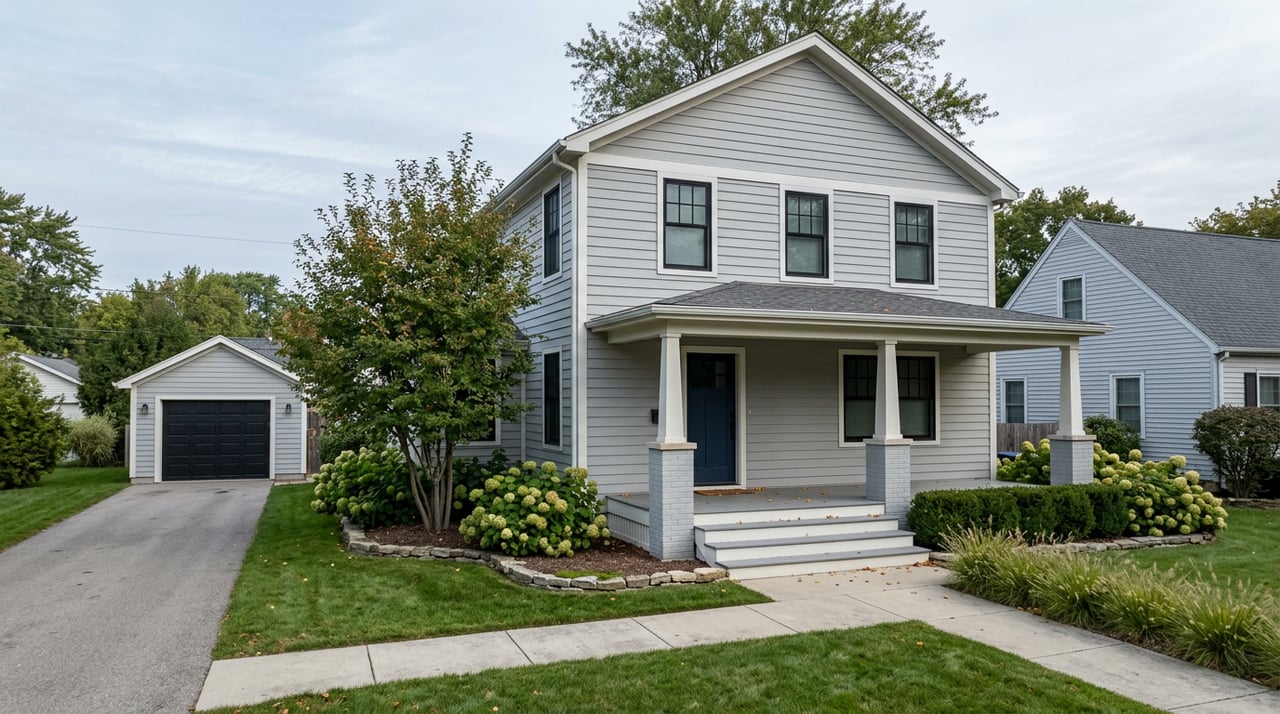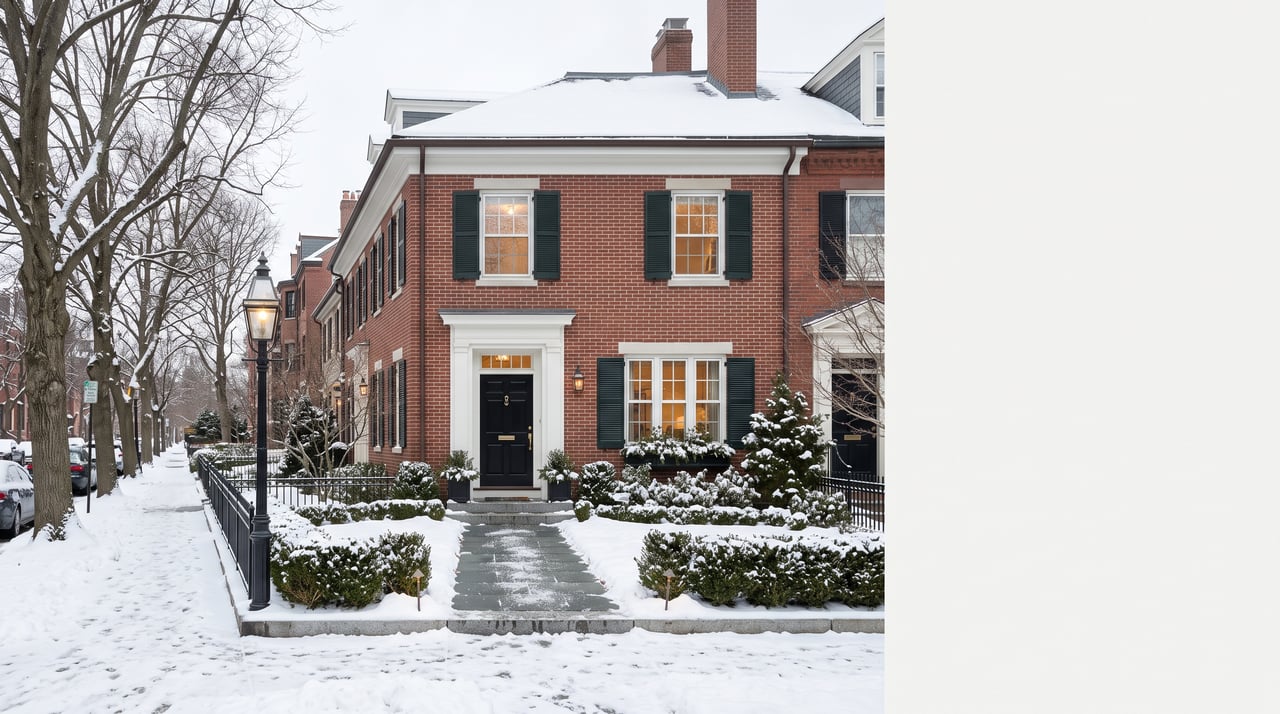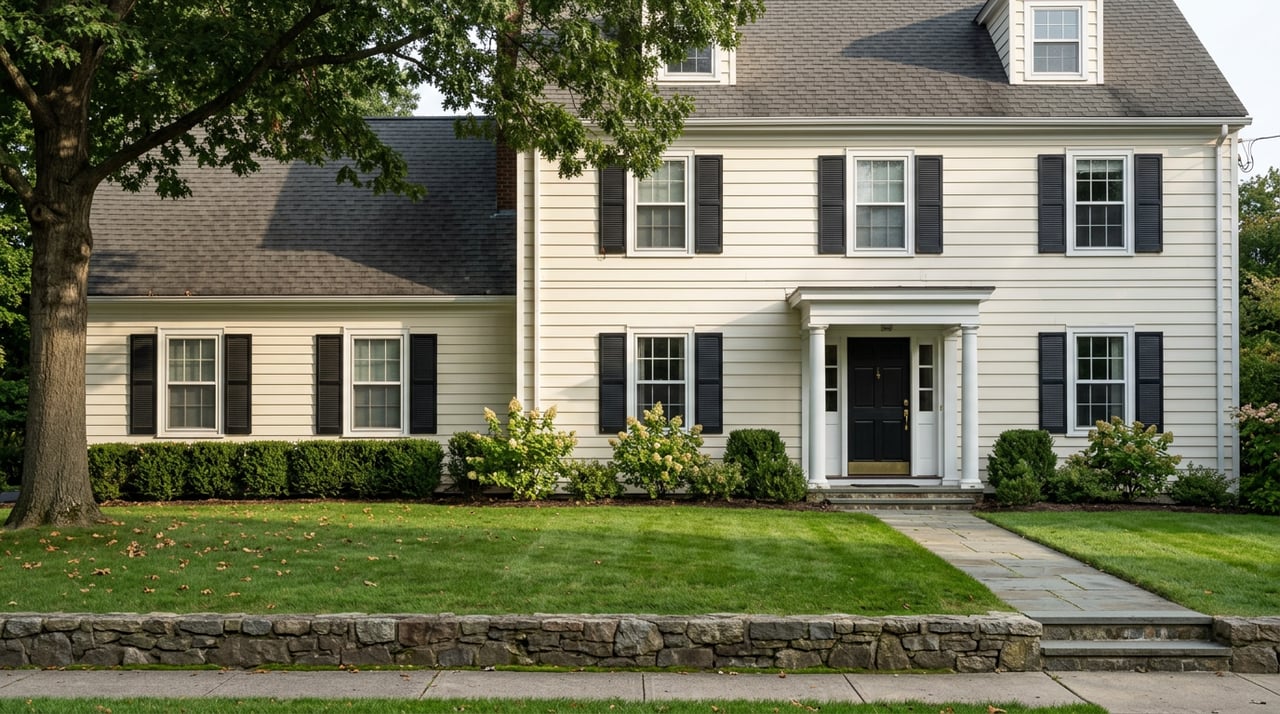
Ask a Newton agent what a house costs and the honest answer is another question: which Newton? A buyer working off a citywide median has already made a $1 million mistake before touring a single kitchen, because that median is an average of a $1 million-plus spread between the city's cheapest village and its most expensive one, all inside the same 18 square miles, the same school district, and the same municipal tax bill.
That's the part the portal listings don't explain. Newton isn't a single market wearing one price tag. It's thirteen villages, and right now two of them, Auburndale and Nonantum, are on opposite trajectories for reasons that have nothing to do with schools or curb appeal and everything to do with what's happening at a specific transit parcel this month.
The Number That Doesn't Answer Your Question
Market reports this year have put Newton's citywide single-family median somewhere in the $1.4M to $1.5M range, depending on the source and the exact week measured. That number is real. It's also nearly useless for deciding where to look, because it's smoothing over villages that don't move together and never have.
At one end, Nonantum, the village longtime residents still call "The Lake" for its bend along the Charles River, has been running closer to $1.0M to $1.2M for typical single-family homes this year. At the other end, Chestnut Hill routinely posts single-family sales at $2M and above, with several listings this year priced north of $2.5M. Auburndale, West Newton, and Newtonville sit in between, generally in the $1.3M to $1.5M band.
That's not a rounding difference. That's a buyer with a fixed budget qualifying for a starter Colonial in one village and a fixer-upper condo in another, inside the same city, using the same lender, at the same rate.
Same Schools, Same Tax Bill, Different Price Tag
Here's what makes the spread genuinely strange instead of just wide. Every one of Newton's 13 villages feeds into the same two high schools, Newton North and Newton South. Every property owner pays into the same municipal budget, at the same residential tax rate, which for fiscal year 2026 sits at roughly $9.70 to $9.80 per $1,000 of assessed value. There's no village-level school premium and no village-level tax premium to explain why Chestnut Hill runs double Nonantum's price for a comparable lot.
So what is actually pricing these villages differently? Two things, and only one of them shows up in a market report.
The first is transit. Of Newton's 13 villages, seven have their own station on the MBTA Green Line D branch: Riverside, Woodland, Waban, Eliot, Newton Highlands, Newton Centre, and Chestnut Hill. Three more, Auburndale, West Newton, and Newtonville, sit on the Framingham/Worcester commuter rail line. That leaves several villages, Nonantum and Newton Corner among them, without a rail stop inside their own borders. Every village on that first list also happens to anchor the top half of Newton's price range.
The second is what's about to get built next to those stations, and that's where the story stops being a static ranking and starts being a live one.
| Village | Typical Single-Family Range (2026 market reports) | Direct Rail Access |
|---|---|---|
| Nonantum | roughly $1.0M–$1.2M | None |
| Newton Corner | roughly $1.1M–$1.3M | None |
| Newton Upper Falls | roughly $1.2M–$1.4M | None |
| Auburndale | roughly $1.3M–$1.5M | Commuter Rail |
| West Newton | roughly $1.3M–$1.5M | Commuter Rail |
| Newtonville | roughly $1.4M | Commuter Rail |
| Newton Highlands | mid-range, walkable | Green Line D |
| Newton Centre | roughly $1.4M–$1.75M | Green Line D |
| Chestnut Hill | $2M–$2.75M+ | Green Line D |
The Deadline That's Testing Auburndale This Month
Auburndale sits in the middle of that table today, but it's the village most likely to move, and the reason has a hard date attached to it. The MBTA's Riverside Station complex, a roughly 25-acre parcel where the Green Line D branch terminates in Auburndale, has been through more than a decade of stalled redevelopment plans. The MBTA board approved a revised plan that scraps office and lab space in favor of housing, and the permitting timeline now carries a real deadline: Phase 1 has to be permitted by August 31, 2026, with any Phase 2 permitted by August 31, 2028, both timed to be resolved before the Riverside station itself is rebuilt in 2034.
That's not a distant rezoning debate. That's this month. If Phase 1 clears permitting on schedule, Auburndale gains a large new residential population sitting directly on a Green Line D stop, the same access that Chestnut Hill and Newton Centre have used to justify their premiums for years. Auburndale's business district along Auburn Street has already been drawing new restaurants and retail this year, and homes there have reportedly been selling faster than comparable properties in Chestnut Hill, at a fraction of the price. A completed Riverside project would be the first time a "value village" gained the exact transit infrastructure that separates the top tier of Newton pricing from everyone else.
There's a friction worth flagging for anyone buying in Auburndale specifically. The village's Historic District Commission is an active body, not a dormant one. It met as recently as August 5, 2026, reviewing certificate of appropriateness applications for properties on Vista Avenue and Windermere Road, covering everything from lighting fixture changes to new construction on side lots. Buyers drawn to Auburndale's older housing stock should expect that exterior changes, additions, and even some site improvements will route through that commission before a permit clears.
Why Nonantum Isn't Following the Same Curve
Nonantum's affordability looks like an opportunity on paper, and for many buyers it genuinely is. But the village's most recent large development proposal shows why "underpriced" and "about to appreciate" aren't the same claim.
A development team has proposed a 234-unit residential building on a 2.7-acre lot on Crafts Street in Nonantum, and the Newton Zoning Board of Appeals hearing on the project drew sharp public pushback. One resident told the board the project was part of why people are "looking to move out of Newton, move out of the village." A ZBA member raised her own concern about the building's footprint, saying her "biggest concern is about the visual impact on the neighborhood." Another board member pushed to cut the project's parking allotment rather than approve it as proposed.
That's a different community response than Auburndale's transit-oriented redevelopment has drawn, and it matters for anyone weighing these two villages as investments rather than just as places to live. Auburndale's Riverside project is moving through MBTA-driven permitting deadlines with institutional momentum behind it. Nonantum's Crafts Street project is facing the kind of resident resistance that tends to slow density, not accelerate it. A village's raw affordability doesn't tell you whether that affordability is temporary or structural. Right now, Auburndale looks more likely to close its gap with the villages above it than Nonantum does.
The Line Item Newton's Median Never Mentions
There's one more number buyers comparing Newton against neighboring towns tend to skip, and it works in Newton's favor. At roughly $9.70 to $9.80 per $1,000 of assessed value, Newton's effective residential tax rate works out to just under 1% of assessed value. Brookline's effective rate runs closer to 1.15%, and Watertown's closer to 1.26%.
Run that against a $1.5M purchase and the annual gap is real money. At Newton's rate, that's roughly $14,600 a year in property tax. At Brookline's rate, it's closer to $17,300. At Watertown's rate, closer to $18,900. Held for ten years, that's a difference of roughly $27,000 against Brookline and $43,000 against Watertown, on the same purchase price. For a buyer treating Newton, Brookline, and Watertown as interchangeable inner-suburb options based on sticker price alone, that's a material miscalculation sitting entirely outside the number on the listing.
What This Means If You're Comparing Villages, Not Just Newton
- Ask for village-level days on market and sale-to-list ratio, not the citywide figure. A village with its own Green Line stop behaves differently than one without.
- If you're looking in Auburndale, ask your agent for the current status of the Riverside permitting process before you anchor on today's price. A Phase 1 approval this year changes the village's transit profile materially.
- If you're looking in Nonantum for value, treat that value as durable rather than assuming it converts to appreciation on the same timeline as Auburndale.
- Renovating or adding onto an older home in Auburndale's historic district means budgeting time for Certificate of Appropriateness review, not just a standard building permit.
- Compare effective tax rates, not just sticker prices, before ruling a town in or out of your search entirely.
FAQ
Is Auburndale a safer long-term bet than Nonantum right now? Auburndale has a hard permitting deadline this year tied to a major transit redevelopment, plus visible commercial investment along Auburn Street. Nonantum's most recent large project has drawn organized community pushback. Neither outcome is guaranteed, but Auburndale currently has more institutional momentum behind its next chapter.
Why does Nonantum cost less if it's just as close to Boston? Nonantum doesn't have its own MBTA rail stop, unlike Auburndale's commuter rail access or Chestnut Hill's Green Line D stop. Proximity to Boston on a map and proximity to a train platform are two different things in Newton's pricing.
Does the tax rate difference between Newton and Brookline actually matter? On a $1.5M home held for a decade, the gap works out to roughly $27,000 in Newton's favor against Brookline's effective rate, based on each town's residential tax rate applied to the same purchase price. That's worth factoring into any side-by-side comparison between the two towns.
Every village in Newton is telling a slightly different story about where the market is headed next, and the right one for your budget and your goals isn't always the one with the lowest sticker price or the most familiar name. If you want a straight read on how a specific Newton village is actually performing, and what a live project like Riverside might mean for your search, the team at Zander Realty Group can walk you through the village-level numbers before you write an offer based on a citywide average that was never built to answer your question.