Is your Randolph home priced to win in today’s market, or to sit and wait? Setting the right number is the single biggest decision you control, and it shapes your time on market, buyer interest, and final proceeds. If you want confidence instead of guesswork, you need a pricing plan grounded in local data and a clear strategy.
In this guide, you will learn how buyers are behaving in Randolph right now, how a pro builds a Comparative Market Analysis, and when to adjust if the market does not respond. You will also get a simple pricing framework you can use to choose the right lane for your goals. Let’s dive in.
Randolph market snapshot: what buyers pay now
Recent portal data shows a tight pricing band for Randolph. The typical home value sits around the mid to high five hundreds, with Zillow estimating a typical value near $569,550 as of January 31, 2026. Redfin reported a median sale around $580,000 in January 2026, while Realtor.com showed a median listing price of $589,900 in December 2025. These three figures form a consistent range of about $570,000 to $590,000 and help set expectations for most homes in 02368. You can review the underlying market snapshots from Zillow’s Randolph values, Redfin’s Randolph market page, and Realtor.com’s Randolph summary.
Price per square foot is another useful cross-check. Randolph has been tracking around the low 300s, with public sources showing roughly $307 to $317 per square foot depending on property mix. Redfin’s page offers current per square foot context that you can compare to your home’s square footage and condition.
Market tempo varies by source and time window. Redfin showed a median of about 32 days on market in January 2026, while Realtor.com’s December 2025 snapshot showed an average near 57 days. Different methods and periods create different results, so treat days on market as directional. Inventory has been moderate, with dozens of active listings in 02368, and some reports noted year over year increases as of late 2025. You can use the Realtor.com Randolph page to scan active competition and trends before you list.
How pros set the right price
Start with a CMA
A Comparative Market Analysis uses recent sold properties that closely match your home’s type, size, and lot to estimate a fair range. The goal is to anchor your price in real buyer behavior, not hopes. Best practice is to focus on sales from the last 3 to 6 months within a half mile when possible, then adjust for square footage, condition, updates, lot, and micro-location. For a deeper overview, see NAR’s consumer guide on what goes into pricing your home.
If recent solds are thin, a strong CMA also looks at pending and active listings to understand direction. Actives are not evidence of value on their own, but they show the alternatives buyers will be weighing against you.
Weigh active competition
Active listings are the current menu buyers see. If a cluster of similar, well-presented homes is listed in your price tier, expect buyers to compare aggressively. If inventory is lighter, you can often list toward the upper end of your comp range and still draw attention. Scan the Realtor.com Randolph summary as a quick view of competition the week you launch.
Use DOM as a signal, not a target
Days on market is a speed and signaling metric. Extended market time or repeated price cuts can raise buyer doubts and often reduce your eventual sale price. Recent housing research on listing histories and relistings confirms that longer marketing durations and multiple resets can change outcomes depending on timing and context. For background on how time and relisting patterns affect results, see the 2025 study in the Journal of Housing Economics.
The most useful signal is the first 1 to 2 weeks live. Listings typically see a surge of interest early, and if showings or online views lag in that window, price and presentation likely need a reset. Zillow’s analysis of listing performance patterns underscores why early momentum matters. Review the framework in Zillow’s research on the early listing window.
Three smart pricing lanes
Your CMA will point to a range. From there, you choose the lane that best fits your goals and the current competition.
Low-side pricing
This approach positions your home slightly below the center of the comp range. It can shorten market time and may spark multiple offers if local supply is tight. The tradeoff is the risk of leaving money on the table if buyer depth is stronger than expected.
Market-match pricing
This is the most common recommendation. You list near the middle of the most similar sold comps. It balances speed and predictability so you can plan your move with less stress. Market-match pricing is often best when your priority is a clean, on-time sale at a fair market value.
Stretch pricing
Stretch pricing aims for the top of the CMA range based on clear, provable advantages like a high quality renovation with permits or a unique lot. This can work if you have time and if few close substitutes are active. The risk is added days on market and a later price cut if buyers do not see the value.
Sanity-check with price per square foot
Price per square foot is a helpful validation tool, not a final answer. Use it to compare your draft price against typical Randolph patterns and your comp set.
- Gather 3 to 5 close comps and compute each sold price per square foot.
- Average the band and multiply by your home’s square footage.
- Adjust up for quality, recent updates, or standout features. Adjust down for deferred maintenance or layout challenges.
- Compare this number to the low 300s per square foot range seen in Randolph to confirm you are in the right zone.
Micro-location and condition adjustments
Commute and transit access
Convenience matters to many buyers. Homes within walking distance of the Holbrook/Randolph MBTA commuter rail station can be more attractive for Boston-bound commuters. If your home is truly close to the station or offers easy access to I-93 and Route 128, that can justify a premium within your CMA. You can reference station details on the MBTA’s Holbrook/Randolph station page when you evaluate your location advantage.
Street, lot, and school assignment
Street type and lot feel affect perceived value. Quiet cul-de-sacs often live differently than busier corridors, and larger or more private lots may rate higher within a comp set. School assignment areas can also influence buyer demand in neutral ways. When you review comps, look for close matches to your block context and assignment area so adjustments are grounded in like-for-like data.
Condition, prep, and staging ROI
Condition is one of the biggest levers you control before pricing. National data shows staging can reduce days on market and can support higher offers. The National Association of Realtors’ 2025 staging report highlights why presentation pays. For curb appeal, projects like a new front door or a garage door replacement often rank high on cost recovery, according to the annual Cost vs. Value Report.
Here are cost-effective prep steps most Randolph sellers can complete in a week or two:
- Declutter, deep clean, and neutralize décor.
- Patch and paint in light, neutral tones.
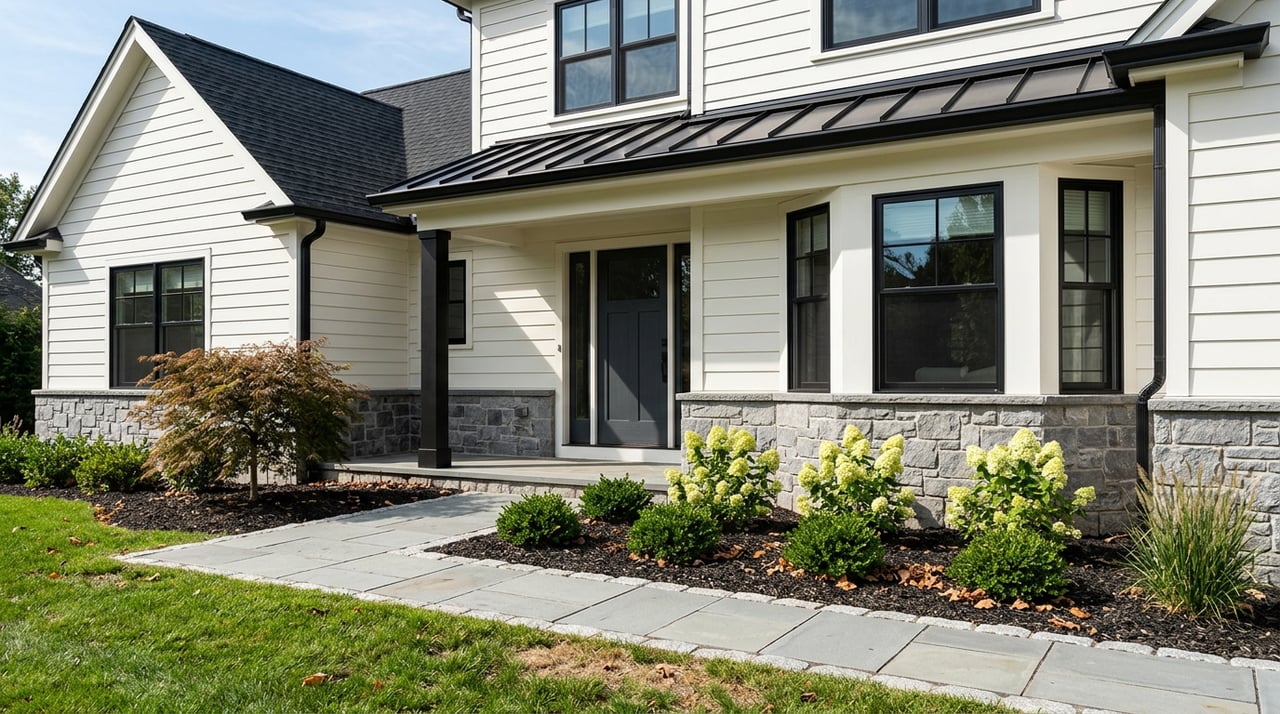
- Tidy landscaping and refresh the front entry with a clean doormat and modern house numbers.
- Address small repairs and obvious deferred maintenance.
- Use a pro photographer and a virtual tour to maximize first-week visibility.
When to adjust your price
Use your first two weeks live as a test. If you do not see steady showings, strong online saves, and at least one serious offer in that window, revisit both price and presentation. The early window carries outsized weight, as outlined in Zillow’s listing-timing analysis.
If you adjust, make it meaningful. A single strategic reduction in week three or four, paired with refreshed photos, a renewed open house push, and updated marketing language, can re-energize demand. Repeated tiny cuts over months tend to signal desperation and can depress your final price. The 2025 Journal of Housing Economics study on relisting and outcomes explains why avoiding a long, choppy price history is often better.
When should you hold your price? If you have qualified traffic, real buyer engagement, or an offer in hand, it can make sense to stay the course while negotiating terms. Your agent should document showings, feedback, and listing analytics to support any recommendation to hold or adjust, as emphasized in NAR’s consumer pricing guidance.
Price endings: 9s, 0s, or precise numbers?
You have likely seen charm pricing like $599,900. Behavioral research shows those endings are not always better. In some settings, more precise or rounded prices can lead to stronger negotiated outcomes, and “just-below” strategies may backfire in negotiation. The key is to fit the price to your competition and how buyers search within your bracket. For context, review the experimental findings in the Journal of Economic Psychology on list price strategies.
Interview checklist: choose the right listing partner
You can validate a recommended price range by asking each agent for clear proof. Here is what to request:
- A CMA packet with 3 to 6 sold comps, 2 to 3 actives, and any pendings used to set your range. Ask for a simple walk-through of adjustments by feature and condition. See NAR’s guide to what goes into pricing for the standard.
- Local track record in Randolph or nearby South Shore towns in your price tier, with average days on market and list-to-sale ratio.
- A marketing plan matched to your target price, including professional photography, a virtual tour, and digital exposure plans. Consider whether light staging or small curb appeal updates align with the NAR staging report and the Cost vs. Value rankings.
- A written pricing contingency plan. Ask for specific triggers, such as, “If showings and serious inquiries are below X by day 14, we will adjust to Y and relaunch with new creative.”
Ready to sell in Randolph?
If you want a pricing plan that blends neighborhood expertise with modern marketing, our team can help. We will build a clear CMA, map your home against real-time competition, and set a smart action plan for the first two weeks on market. When the goal is a confident sale, partner with a local team that brings boutique precision and big-platform reach. Connect with Zander Realty Group to get your personalized pricing plan.
FAQs
How should I price my Randolph home in 2026?
- Start with a CMA built from recent local solds, then compare to active competition and use Randolph’s current per square foot patterns in the low 300s to sanity-check your number, as outlined by NAR’s pricing guidance.
What is a Comparative Market Analysis and why does it matter?
- A CMA analyzes recent sold properties similar to yours and adjusts for size, condition, upgrades, lot, and micro-location to produce a fair range, which is the industry standard for pricing according to NAR’s consumer guide.
How long should I wait before a price reduction?
- Use the first 7 to 14 days as your test; if showings and online interest are soft in that window, make a strategic adjustment and refresh your marketing, consistent with Zillow’s research on the early listing window.
Are price endings like $599,900 better than $600,000?
- Not always; experimental research shows charm pricing is not uniformly superior and that precise or rounded prices can sometimes negotiate better, as shown in the Journal of Economic Psychology study.
Do staging and small upgrades help in Randolph?
- Yes; national data shows staging can reduce days on market and support higher offers, and curb appeal projects often recoup a high share of cost, per the NAR staging report and Cost vs. Value.
Does being near the Holbrook/Randolph MBTA station change my price?
- Proximity to transit can increase buyer interest for commuters; if your home is within easy walking distance, note that advantage in your CMA and marketing, and reference the MBTA station details to highlight convenience.