Wondering what it’s really like to live in Boston’s Seaport day to day? If you are considering a move to 02210, this waterfront district offers a very specific kind of city living: modern buildings, easy access to transit, active public spaces, and a fast-paced neighborhood feel. Understanding how daily routines work here can help you decide whether Seaport matches your lifestyle. Let’s dive in.
Seaport at a glance
Boston’s Seaport, within ZIP code 02210, is a compact and dense urban neighborhood. Census data shows about 6,971 residents living in just 0.9 square miles, with 4,588 households and a median age of 35.7. The area also has a median household income of $172,124 and a median owner-occupied home value of $1,190,900.
Those numbers help explain the neighborhood’s overall feel. Seaport is not a traditional Boston area of detached homes and quiet residential side streets. Instead, it functions more like a newer mixed-use district where residential buildings, offices, restaurants, and waterfront public spaces all blend together.
Boston planning materials also show how quickly the neighborhood has evolved. What was once largely industrial land and warehouses has shifted into a major residential, tech, and creative hub. New development continues to shape daily life, with apartment, condominium, and micro-unit options, along with large-scale projects like Seaport Square and Block M adding more homes and retail space.
Waterfront living shapes the routine
One of the biggest draws of daily life in Seaport is how closely the neighborhood connects you to the water. Harborwalk runs along the piers and links residents to Boston’s larger waterfront path network, giving you an easy option for a morning walk, a run after work, or simply a place to take in the harbor.
Public open space plays a big role here. Fan Pier serves as one of the area’s major gathering points, and Martin’s Park at 64 Sleeper Street adds another well-used waterfront destination. Opened on June 15, 2019, the park was designed as an inclusive and climate-resilient space, which reflects the neighborhood’s newer planning approach.
In practical terms, that means your daily routine may include more time outdoors than you would expect in a dense city neighborhood. Even if you live in a condo tower, the public realm gives you room to move, relax, and stay connected to the harbor.
Dining and social life in Seaport
Seaport has a strong dining and social scene, but it tends to feel more like a destination neighborhood than a quiet local strip. Official local listings highlight well-known spots such as The Barking Crab, Serafina, Moxie’s, The Smoke Shop BBQ, Committee, and Lola 42.
That mix shapes the neighborhood’s energy. You are more likely to find lively restaurants, after-work meetups, and seasonal events than old-school corner diners. For many residents, that is part of the appeal, especially if you enjoy being able to step outside and have plenty of options nearby.
Events also add to the area’s rhythm. District programming includes pop-ups, block parties, and seasonal activations at places like Seaport Common and The Superette. If you like a neighborhood that feels active and programmed throughout the year, Seaport stands out.
Arts and culture are close by
For a neighborhood its size, Seaport has a notable concentration of cultural destinations. The South Boston Waterfront includes major institutions such as the Institute of Contemporary Art and the Children’s Museum, according to Boston planning materials.
Boston.gov also notes that GrubStreet and C3 were selected for civic and cultural space at 50 Liberty on Fan Pier. That adds another layer to the neighborhood beyond dining and office space. It gives Seaport a more rounded daily experience, especially if you value nearby arts programming and public events.
This kind of access matters when you are choosing where to live. In Seaport, culture is not something you need to plan a whole day around. It can be part of an ordinary weeknight or weekend close to home.
Getting around without relying on a car
Transit is one of Seaport’s strongest lifestyle advantages. Seaport TMA says the Silver Line routes SL1, SL2, and SL3 serve South Station, Courthouse, World Trade Center, and Silver Line Way. Bus routes 4, 7, 9, 11, and 47 also serve the area.
That makes commuting and regional access more practical than many people assume. SL1 also connects the neighborhood to Logan Airport seven days a week, and airport boarding is free. If you travel often for work or personal reasons, that convenience can become a real quality-of-life benefit.
The neighborhood also supports walking and biking. Bluebikes stations are spread throughout the district, and Seaport TMA highlights protected bike lanes as a major improvement. Weekly Bike Seaport check-ups on Seaport Common, along with commute reward programs and public fitness events, reinforce the area’s active transportation culture.
The ferry adds another option
The ferry is more than a scenic extra in Seaport. It has become a practical commuting choice for some residents. Seaport TMA says the Seaport Ferry connects the district with North Station and East Boston for $5 each way on weekdays during commuting hours, and service to Pier 10 launched on June 2, 2025.
That gives you another way to think about movement through the city. Depending on where you work or how you prefer to travel, the ferry can offer a different rhythm than crowded roads or standard transit routes. In a waterfront neighborhood, that is a meaningful part of everyday life.
Driving is still possible, of course, but Seaport is not built around car-first living. Boston has used demand-responsive parking pricing in the area to help manage parking and congestion, which reflects the neighborhood’s dense, mixed-use design.
What home life usually looks like
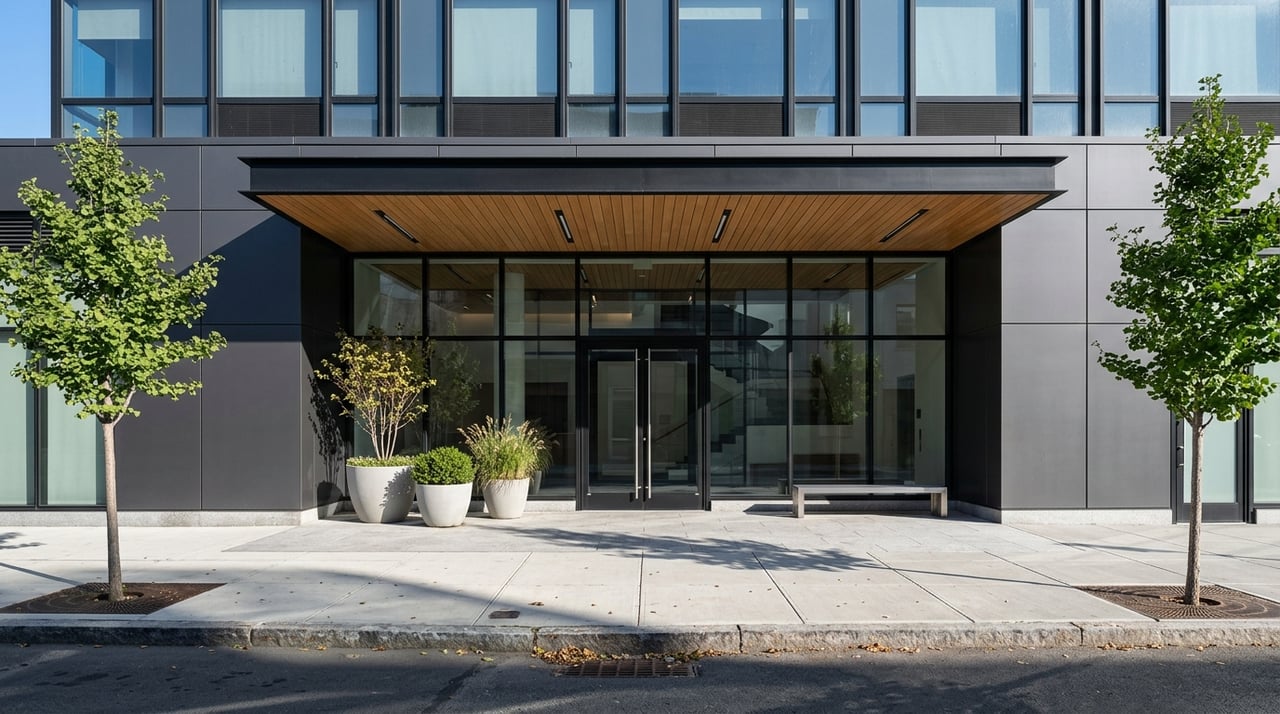
If you picture Seaport correctly, you are probably picturing condos, apartments, and newer buildings. That is because the housing stock skews strongly toward newer residential product rather than older single-family homes. Boston planning materials note that many buildings have recently been built or remain under development.
For many buyers and renters, that is a major plus. You may find lower-maintenance living, modern finishes, building amenities, and a location that puts restaurants, offices, and waterfront paths close by. That can be especially appealing if you want convenience and an urban lifestyle without the upkeep that often comes with a detached property.
The tradeoff is that Seaport is generally a premium market. With a median owner-occupied home value near $1.19 million in 02210, housing here reflects the neighborhood’s location, new construction profile, and waterfront appeal.
Who Seaport fits best
Seaport tends to work well for renters, first-time buyers, downsizers, and professionals who want walkability, waterfront access, transit options, and condo living. If your ideal routine includes grabbing coffee on foot, commuting by transit or ferry, working out nearby, and spending time along the harbor, the neighborhood may feel like a strong match.
It may be less natural for buyers seeking a traditional single-family setting, a yard, or a quieter low-rise street pattern. The area’s density, newer development, and active commercial environment create a different kind of lifestyle. That difference is not a drawback or an advantage on its own. It simply depends on what feels right for you.
This is why neighborhood fit matters so much. A beautiful condo in the wrong setting can feel less practical than a modest home in the right one. Seaport offers a distinct lifestyle, and it is best to evaluate it based on how you actually want to live each day.
A note on climate resilience
Because Seaport sits along Boston’s waterfront, climate resilience is part of the neighborhood conversation. Boston notes that rising sea levels and coastal storms increase risk along low-lying waterfront areas, including South Boston and Seaport.
The city’s planning focus includes resilient open spaces, prepared buildings, and shoreline access. For you as a buyer or renter, this means it is smart to understand how individual buildings approach resilience and what features or planning measures may be in place. In a newer neighborhood like Seaport, that topic is part of the long-term picture.
What daily life in Seaport really means
At its core, daily life in Boston’s Seaport is about convenience, access, and a modern urban pace. You get a dense neighborhood with major waterfront amenities, strong transit connections, active public spaces, and a housing mix centered on newer condos and apartments.
You also get a neighborhood that keeps changing. With continued development and a steady flow of new residents, Seaport can feel dynamic, polished, and fast-moving. Census data showing that 29.6% of residents moved within the prior year supports that sense of mobility and constant change.
If you want classic Boston charm in a traditional residential setting, Seaport may not be your first choice. But if you are drawn to newer housing, harbor views, walkability, and an active live-work-play environment, it offers one of the city’s most distinctive lifestyles.
If you are thinking about buying, selling, or renting in Boston’s Seaport, Zander Realty Group can help you compare buildings, understand the neighborhood, and find the right fit for your goals.
FAQs
What is daily life like in Boston’s Seaport neighborhood?
- Daily life in Seaport is shaped by waterfront access, newer condo and apartment living, strong dining options, public open space, and convenient transit connections.
Is Boston’s Seaport neighborhood walkable?
- Yes. Seaport is designed as a dense mixed-use district where many residents can walk to restaurants, public spaces, cultural destinations, and transit stops.
How do residents commute from Boston’s Seaport?
- Many residents use the Silver Line, local bus routes, biking infrastructure, walking routes, and the Seaport Ferry, with driving available but less central to the neighborhood’s design.
Is Boston’s Seaport a good fit for condo buyers?
- Seaport can be a strong fit for buyers who want newer housing, lower-maintenance living, waterfront access, and proximity to transit and city amenities.
Is Boston’s Seaport neighborhood expensive?
- The area is considered a premium market, with Census data showing a median owner-occupied home value of $1,190,900 in ZIP code 02210.
Does Boston’s Seaport have parks and outdoor space?
- Yes. Harborwalk, Fan Pier, Seaport Common, and Martin’s Park all contribute to the neighborhood’s outdoor lifestyle and public-space appeal.